

The Debt Free Teacher Reviews: 5 Things Educators Should Know
The Debt Free Teacher markets debt education, financial tools and personalized assistance specifically to educators. Its current Trustpilot profile has a strong overall rating, but the reviews also raise important questions about what service teachers ultimately receive, whether the program is exclusive to educators and what happens to enrolled creditor accounts.
The most important distinction is whether The Debt Free Teacher is directly providing a financial product or matching the consumer with a separate debt-relief company.
1. Who Is The Debt Free Teacher?
The Debt Free Teacher presents itself as a financial resource for educators who are struggling with credit cards, personal loans or other debts.
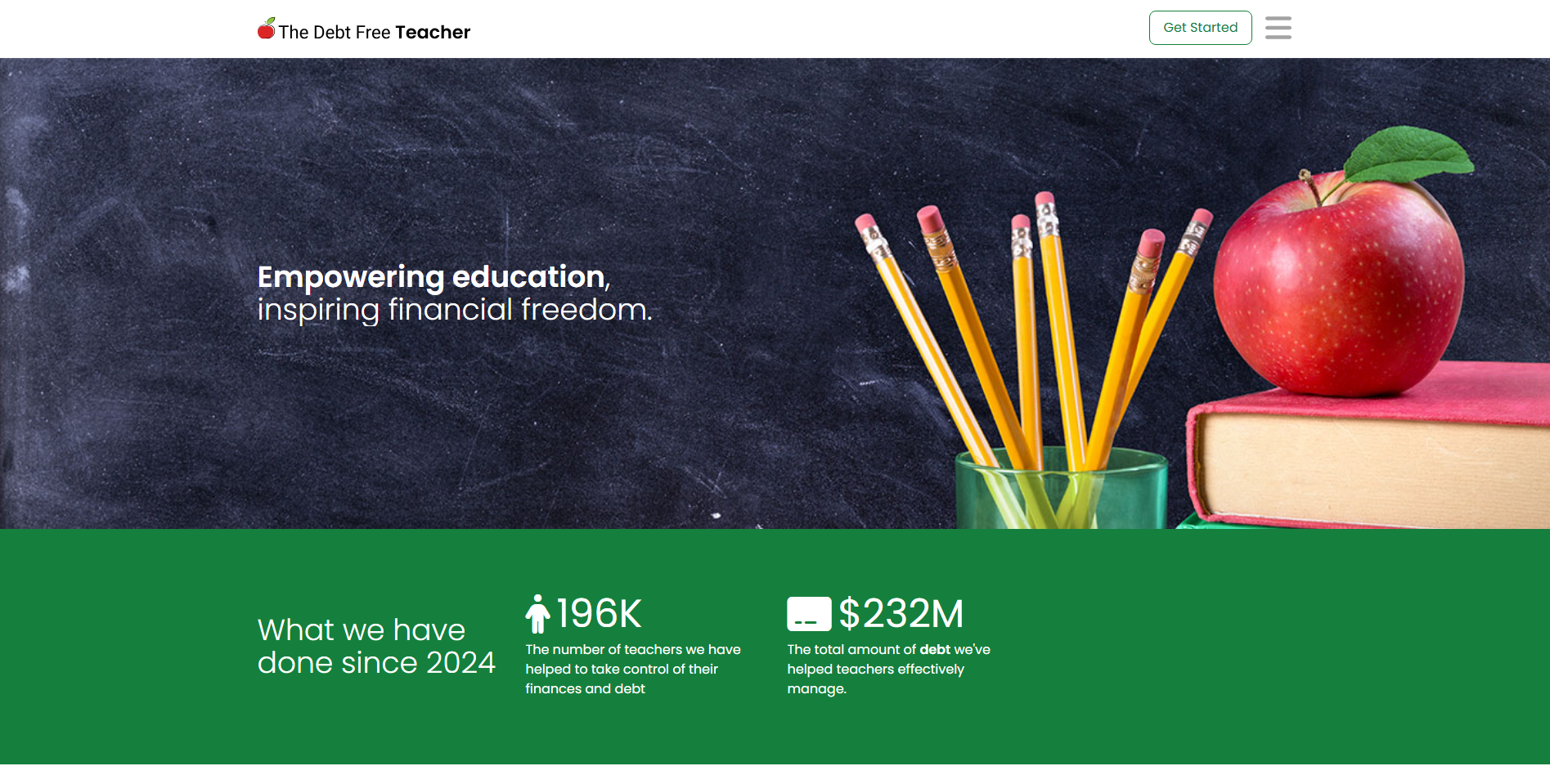
Review the current Debt Free Teacher website .
2. What Financial Tools Does It Offer?
The website has promoted several free educational and planning tools:
- Financial Situation Quiz: A questionnaire intended to identify potential financial options.
- DIY Budget Tool: A tool intended to help users organize income and expenses.
- Debt Free Plan: A debt-payoff planning resource.
- Debt Payoff Calculator: An estimate of how long repayment may take
- Provider matching: A process that may connect a consumer with another company.
3. Who Owns or Operates The Debt Free Teacher?
The Debt Free Teacher’s prior About page stated that the brand was owned and operated by Bill Doctor. BBB currently lists The Debt Free Teacher as an alternate name of BillDoctor.org.
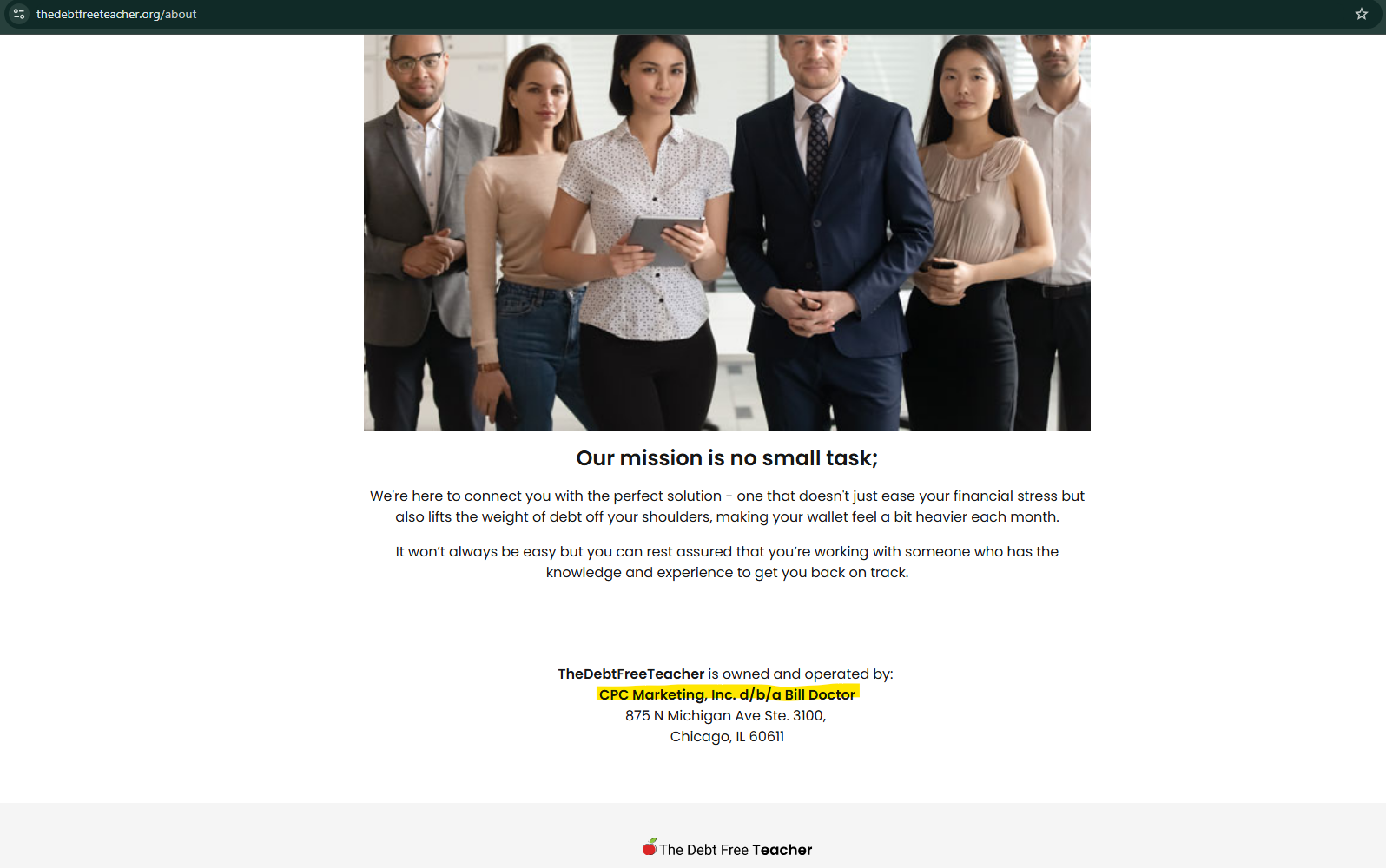
| BBB Information | Current Listing |
|---|---|
| Primary BBB business | BillDoctor.org |
| BBB accreditation | Accredited since March 18, 2022 |
| BBB rating | A+ |
| Business categories | Financial services, debt-consolidation services and affiliate marketing |
| Alternate names | The Debt Free Teacher, Financially Free Nurse, The Debt Free First Responder, Veteran Debt Assistance and others |
| Listed products | Consolidation loans, debt settlement, credit-card relief, budgeting tools, payoff calculators and SaveWise |
Review the current BillDoctor.org BBB profile and Ascend’s separate Bill Doctor review .
What Does The Debt Free Teacher’s BBB Badge Mean?
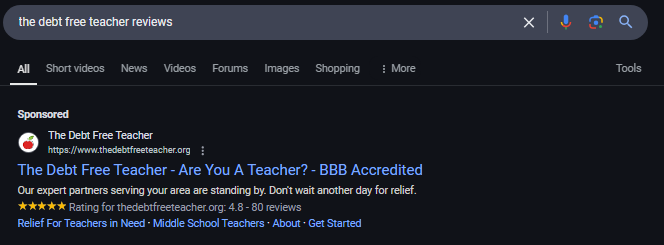
Earlier versions of The Debt Free Teacher website displayed a BBB badge. Clicking it led to BillDoctor.org’s BBB profile rather than a separate BBB profile titled The Debt Free Teacher.

4. What Do Current Debt Free Teacher Reviews Show?
Trustpilot displayed a 4.7 out of 5 rating from 275 reviews when this article was updated. Your screenshots captured the profile at 273 reviews, showing how quickly review counts can change.
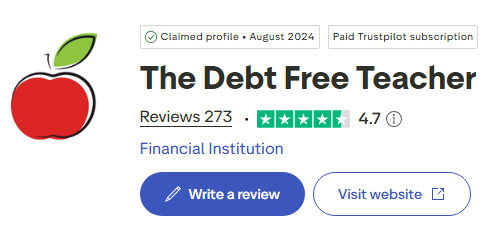
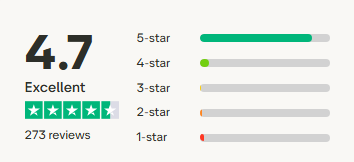
Review the current Debt Free Teacher Trustpilot profile .
Review timing matters
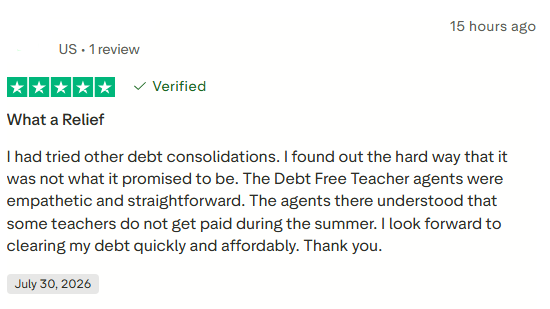
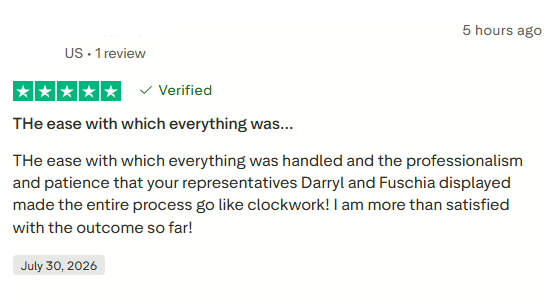
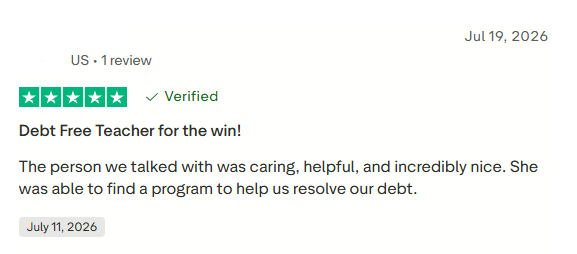
Many positive reviews discuss the initial call, enrollment experience or representative. Some reviewers explicitly state that they have not yet experienced the program’s results.
An excellent consultation can be meaningful, but it is not the same as completing a multiyear debt program with successful creditor outcomes.
What Do Positive Debt Free Teacher Reviews Say?
Empathy, patience and clear explanations
- Representatives described as caring and understanding
- Consumers felt less judged about their debt
- Staff members explained the proposed program clearly
- The enrollment process was described as easy or professional
- Some representatives understood teacher-specific cash-flow issues
Most examples describe an early-stage experience
These reviews support the conclusion that many consumers appreciated the representatives. They do not necessarily establish the final settlement amounts, fees, credit effects or completion rates.
Examples of positive Trustpilot feedback
What Do Negative Debt Free Teacher Reviews Allege?
The negative reviews focus less on the friendliness of representatives and more on what happened after the consumer entered the process.
Transfers, transparency and possible credit consequences
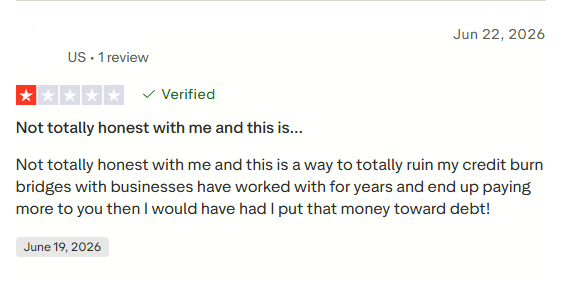
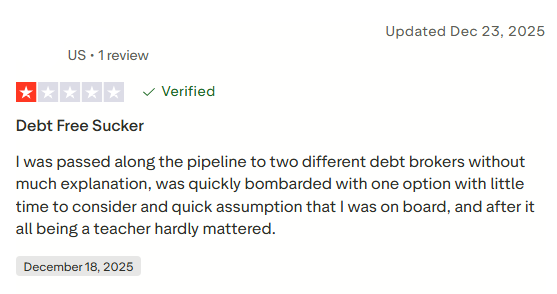
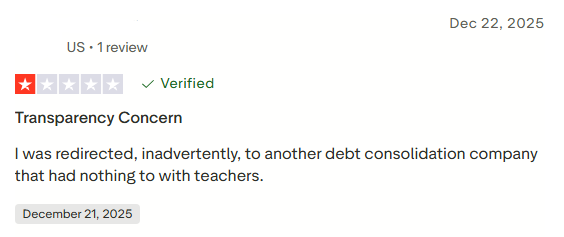
These reviews are individual reports, not independently proven facts
The screenshots verify that the reviews were published. They do not by themselves prove that every consumer is transferred, that every program damages credit or that every applicant receives inadequate disclosure.
What the review pattern suggests
The core issue is product clarity. Consumers should know whether The Debt Free Teacher is only matching them with another company, what that company is offering and whether participation requires creditor accounts to become delinquent.
Does The Debt Free Teacher Provide Exclusive Teacher Benefits?
The brand and representatives may provide educator-focused messaging and may understand issues such as seasonal pay schedules, classroom expenses or variable summer income.
However, we did not identify evidence that the underlying debt program automatically provides teachers with a legally required special interest rate, settlement percentage, creditor concession or government benefit.
| Potential Teacher-Focused Feature | What It May Provide | What It Does Not Necessarily Provide |
|---|---|---|
| Teacher-focused representatives | Familiarity with educator income schedules and financial stress. | A guaranteed reduction in fees or creditor balances. |
| Teacher branding | Messaging designed to feel relevant to educators. | Proof that the provider is a nonprofit or government program. |
| Budgeting tools | Help organizing expenses and planning debt payoff. | A guaranteed loan or settlement outcome. |
| Provider matching | Connection with a company offering a possible debt solution. | An exclusive provider available only to teachers. |
Ask for the teacher-specific benefit in writing
Ask whether educators receive a lower fee, special underwriting, different payment schedule, creditor concession or other measurable advantage. If the underlying program is the same program offered to the general public, the main distinction may be the marketing and consultation experience.
How Does Debt Settlement Work?
Some reviews describe a debt-relief process that appears consistent with debt settlement. Debt settlement differs materially from a consolidation loan.
- Eligible unsecured debts are enrolled.
Programs commonly focus on credit cards, personal loans and certain medical debts. - Normal creditor payments may stop.
The consumer instead deposits money into a dedicated account intended to fund future settlements. - Accounts may become delinquent.
Late fees, interest, collection calls, charge-offs and credit damage can occur. - The provider attempts negotiations.
Creditors may accept, reject or counter a proposed settlement. - The consumer approves proposed settlements.
Settlement funds and earned provider fees are then paid according to the agreement.
Debt settlement does not create a legal automatic stay
Creditors may continue collection activity or file lawsuits while the consumer is saving for settlements. A creditor is not required to accept a voluntary settlement offer.
Review the Consumer Financial Protection Bureau’s explanation of consolidation, credit counseling and debt settlement .
How Do Debt-Settlement Companies Charge Fees?
Debt-settlement fees are commonly calculated as a percentage of enrolled debt or another amount defined in the consumer agreement. The exact structure varies by company and state.
Example of a percentage-of-enrolled-debt fee
Suppose a consumer enrolls $30,000 of debt and the agreement charges a 20% fee based on enrolled debt:
- Enrolled debt: $30,000
- Illustrative fee percentage: 20%
- Illustrative provider fee: $6,000
That fee would be separate from the money required to fund creditor settlements. Actual fees and settlement results can differ.
The earlier article described fees as a percentage of the amount saved. That is not the only fee structure. Consumers should rely on the written agreement and request the fee in both percentage and estimated dollar terms.
- Percentage used to calculate the fee
- Whether it is based on enrolled debt or savings
- Estimated total program fee
- Dedicated-account fees
- Legal or litigation-related fees
- Cancellation and refund provisions
- Expected creditor settlement funding
- Possible tax consequences
Compare Debt Settlement With Other Options
Debt settlement can be appropriate for some consumers, but it should be compared with a consolidation loan, nonprofit credit counseling, direct creditor hardship assistance and bankruptcy.
Compare Your Debt Options
Estimate potential payments and costs for debt settlement, Chapter 7, Chapter 13 and other debt-relief approaches.
Results are educational estimates and are not offers from The Debt Free Teacher, Bill Doctor or any third-party provider.
How the Main Debt Options Compare
| Option | Potential Benefit | Important Limitation |
|---|---|---|
| Consolidation loan | Can replace several debts with one new loan and may reduce interest. | Approval and pricing depend on credit, income and underwriting. |
| Nonprofit debt-management plan | May reduce participating credit-card interest while generally repaying principal. | Enrolled accounts may close and not every creditor participates. |
| Debt settlement | May resolve eligible debts for less than the contractual balance. | Commonly involves delinquency, fees, credit damage and lawsuit risk. |
| Chapter 7 bankruptcy | May discharge qualifying unsecured debt relatively quickly. | Eligibility, exemptions and nondischargeable debts must be reviewed. |
| Chapter 13 bankruptcy | Provides a court-supervised plan and may address arrears. | Commonly requires three to five years of plan payments. |
Debt Settlement vs. Bankruptcy
Debt settlement may help consumers who can fund negotiated settlements but cannot repay their full balances. Bankruptcy may be faster or less expensive for some consumers, especially when unsecured debt is large relative to available income.
Questions to Ask Before Enrolling
- Is The Debt Free Teacher providing the service?
Ask whether it is only matching you with a separate company. - What is the legal name of the provider?
Match the contract, website, address and review profile. - Is this a loan, debt-management plan or settlement program?
Ask for the exact product type in writing. - Will I stop paying my creditors?
Ask what happens to interest, late fees, credit reports and collection activity. - What benefit is exclusive to teachers?
Request a measurable explanation rather than relying only on branding. - What are the total fees?
Request the percentage, calculation method and estimated dollar amount. - Can creditors sue during the program?
Ask how the provider handles lawsuits, judgments and creditor liens. - What happens if I cancel?
Review refunds, dedicated-account access and earned fees. - What results does the provider track?
Ask about completion rates, average fees and actual creditor outcomes. - When was the review written?
Distinguish enrollment feedback from completed-program experience.
Frequently Asked Questions
Is The Debt Free Teacher a debt-settlement company?
Its website appears to connect consumers with other providers. Some reviews describe programs consistent with debt settlement, but the exact provider should be identified from the agreement.
Is The Debt Free Teacher owned by Bill Doctor?
Earlier website language said it was owned and operated by Bill Doctor. BBB currently lists The Debt Free Teacher as an alternate name of BillDoctor.org.
Is The Debt Free Teacher BBB accredited?
BBB accreditation is listed under BillDoctor.org. BBB identifies The Debt Free Teacher as one of BillDoctor.org’s alternate names.
What is The Debt Free Teacher’s Trustpilot rating?
Trustpilot displayed a 4.7 out of 5 rating from 275 reviews when this article was updated. Ratings and counts can change.
What do positive reviews say?
Positive reviewers commonly praise representatives for empathy, patience, professionalism and clear explanations during enrollment.
What do negative reviews say?
Critical reviewers commonly raise concerns about transfers to other companies, insufficient transparency, credit effects and whether the program provides anything unique to teachers.
Are the Trustpilot reviews verified?
Many visible reviews are labeled verified. Verification does not necessarily mean that the reviewer completed the entire debt program.
Does The Debt Free Teacher provide teacher-only benefits?
The brand offers educator-focused messaging and may understand teacher cash-flow issues. We did not identify a guaranteed teacher-only rate, settlement or government benefit.
Will debt settlement hurt credit?
It can. Settlement programs commonly involve missed payments, charge-offs and settled accounts, which can materially affect credit.
Can creditors sue during debt settlement?
Yes. Debt-settlement enrollment does not create an automatic stay. Creditors may continue collections or file lawsuits.
How are debt-settlement fees calculated?
Fees may be based on enrolled debt, savings or another contractual formula. Review the agreement and request an estimated dollar amount.
SaveWise has been promoted as a savings and budgeting tool associated with Bill Doctor. Confirm the publisher and current download source before installing it.
Understand the Program Before You Enroll
The Debt Free Teacher’s strong reviews suggest that many consumers value the representatives’ empathy and explanations. The more important long-term question is what company provides the program and what happens after enrollment.
Confirm the provider, program type, fees, creditor-payment structure and teacher-specific benefit. Then compare the proposal with nonprofit credit counseling, consolidation and bankruptcy alternatives.
Review scores, company relationships, website content and provider disclosures may change. Review screenshots document what was displayed when captured but do not independently establish every reviewer allegation or guarantee any consumer’s result.
 Yes
Yes No
No