

Symple Lending Reviews: Is It a Loan Company? 5 Things to Know
Symple Lending markets personal and consolidation loans with rates starting at 6.99%, loan amounts from $5,000 to $100,000 and potential funding within one to two business days.
However, some consumers say they contacted Symple Lending expecting a loan and were later presented with a debt-relief or consolidation program instead. This article explains what Symple Lending currently advertises, what its reviews show and how to distinguish a loan from a debt-settlement program.
1. Who Is Symple Lending?
Symple Lending describes itself as a financial-technology company that helps consumers explore personal loans, consolidation loans and other financial solutions.
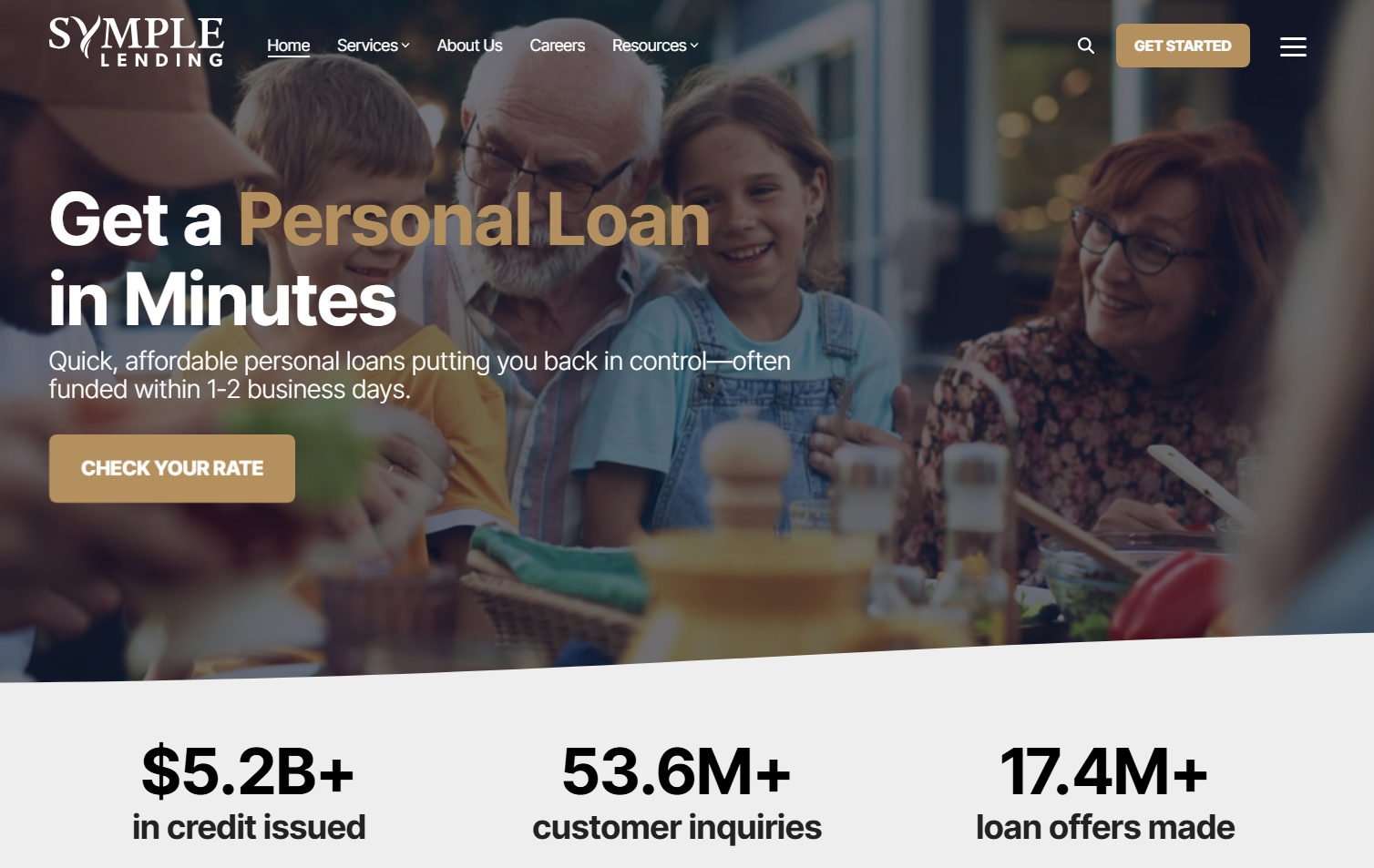
Its current About page states that the company was founded in 2022 and describes its mission as making lending more human.
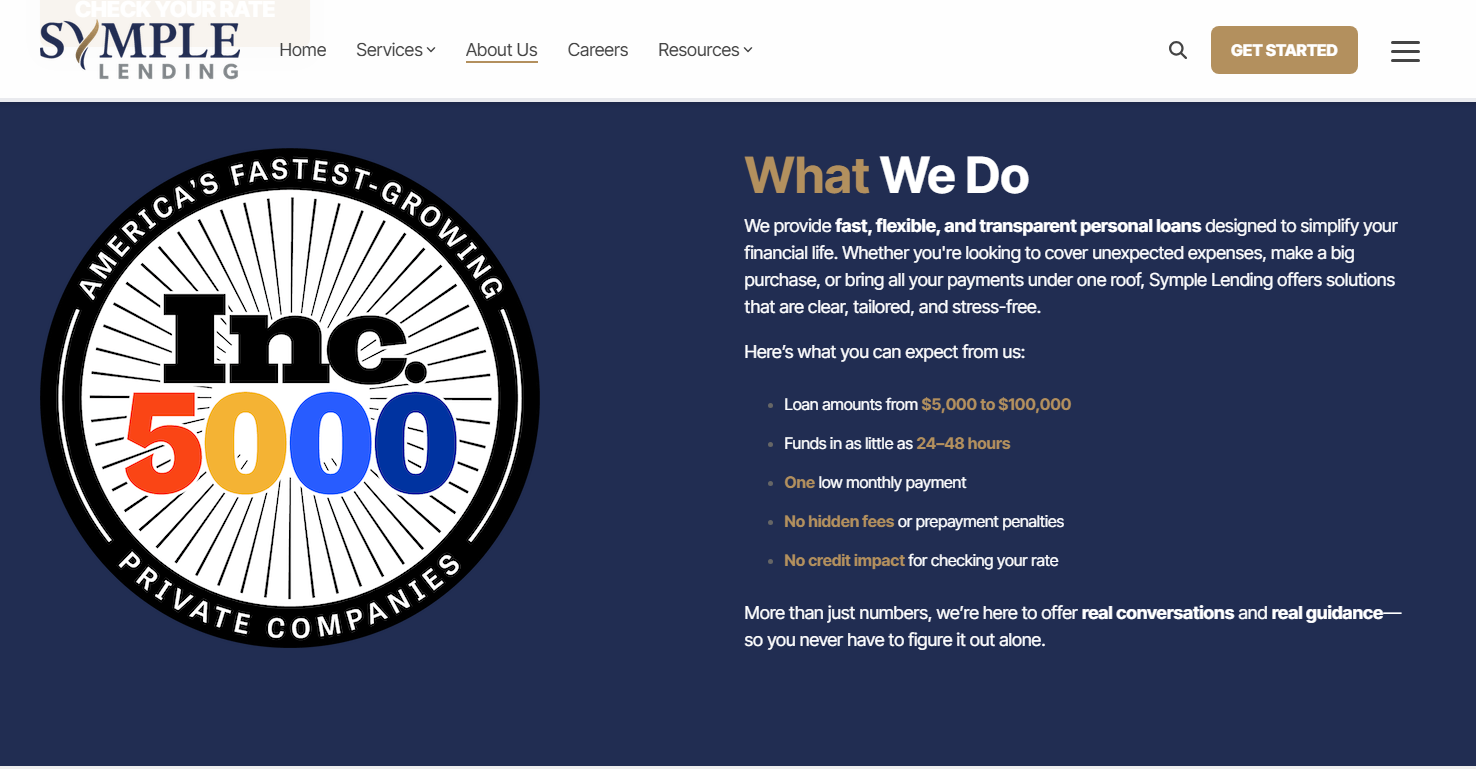
Review Symple Lending’s current homepage and About page .
2. What Loan Terms Does Symple Lending Advertise?
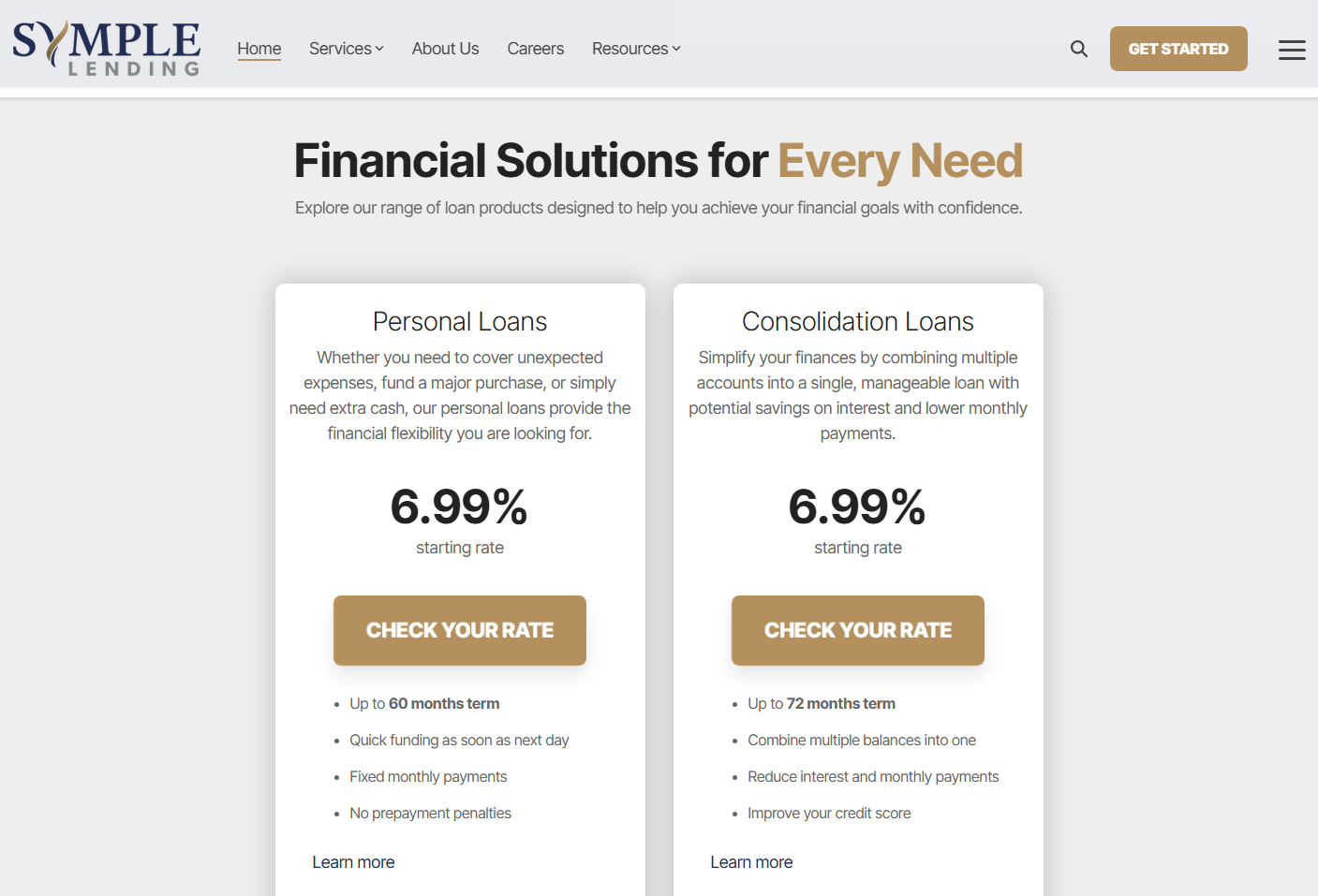
| Current Website Claim | What It Means | What to Verify |
|---|---|---|
| Rates starting at 6.99% | The lowest advertised starting rate may be available only to qualified borrowers through certain lending partners. | Your actual APR, origination fee and total finance charge. |
| Loans from $5,000 to $100,000 | Available loan amounts depend on approval and the participating lender. | The amount actually offered and the net amount received. |
| Terms from 24 to 84 months | Longer terms may lower the monthly payment. | Whether the longer term materially increases total interest. |
| No prepayment penalties | The advertised products may permit early payoff without a prepayment penalty. | Confirm this in the actual lender agreement. |
| No credit impact to check a rate | The initial rate-check process may use a soft credit inquiry. | Whether a later lender application requires a hard inquiry. |
| Funding within 24 to 48 hours | Some approved and verified applicants may receive funds quickly. | Funding depends on lender approval, verification and bank timing. |
Starting rate does not mean likely rate
The 6.99% figure is the lowest advertised starting rate, not a promise that every applicant will receive that APR. Symple Lending’s broader disclosures state that actual loan APRs may be as high as 35.99%.
3. How Does Symple Lending’s Process Work?
- You check a potential rate.
The application requests information about the desired loan, debts, income and financial profile. - Symple Lending evaluates available options.
The company may review potential loan offers from lending partners or discuss other financial solutions. - You review any available loan offer.
Loan amount, APR, fees, term and approval depend on the actual lender. - Additional documentation may be requested.
A lender may require income records, bank statements, identification or other underwriting documents. - Approved funds may be deposited.
Funding speed depends on verification, approval and banking requirements.
Compare the full offer
- Actual lender’s legal name
- Annual percentage rate
- Origination fee
- Net proceeds received
- Monthly payment
- Number of payments
- Total interest
- Total amount repaid
- Soft or hard credit inquiry
- Prepayment conditions
What If You Received a Symple Lending Mailer?
Some people may receive a mailer that resembles a check and advertised a loan of up to $35,000 with a 5.95% rate. Current website terms may differ from mailer figures.


A mailer is not final approval
A preselected or promotional mailer may be based on limited marketing criteria. Final approval may depend on credit, income, debt-to-income ratio, identity verification and lender underwriting.
Questions to ask about the mailer
- Is this an actual approval or a marketing invitation?
- Which lender would fund the loan?
- What is the actual APR?
- What origination fee applies?
- What amount will be deposited?
- Will a hard inquiry occur?
- What happens if no loan is available?
- Could I be offered debt relief instead?
4. What Do Current Symple Lending Reviews Show?
Symple Lending has strong aggregate ratings on both Trustpilot and BBB, although the platforms show different review distributions.
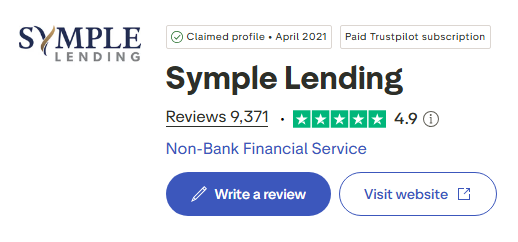
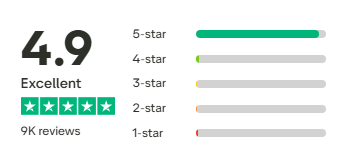
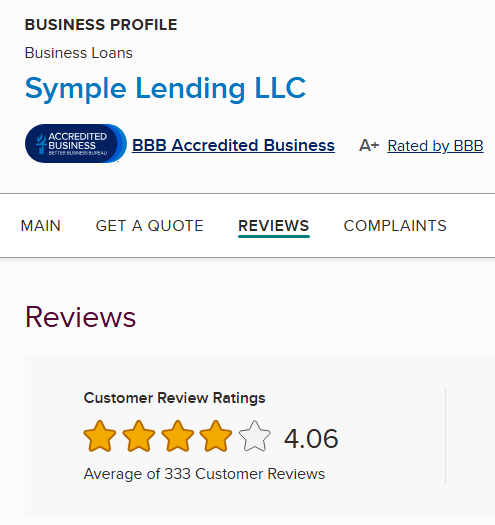
Review the current Symple Lending Trustpilot profile and Symple Lending BBB customer reviews .
BBB’s A+ rating is not the customer-review score
BBB’s A+ letter grade reflects BBB’s assessment of business factors. The 4.06 customer score is a separate average based on reviews submitted by consumers.
What Do Positive Symple Lending Reviews Say?
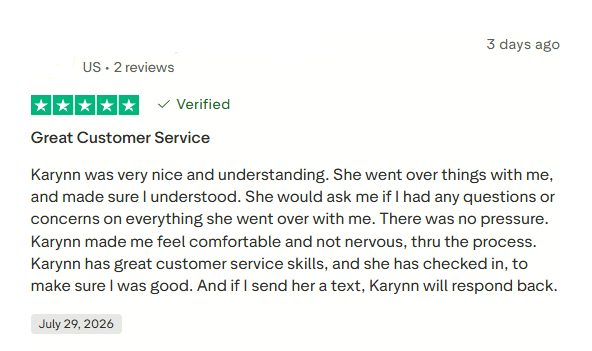
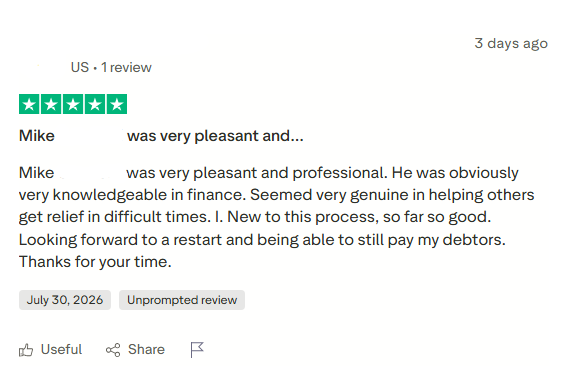
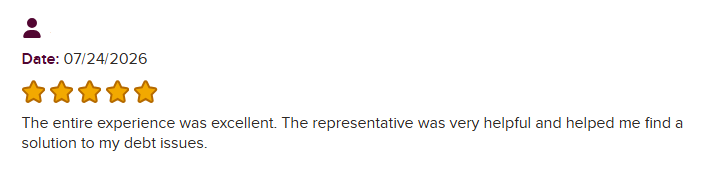
Helpful, patient and professional representatives
- Representatives described as empathetic and knowledgeable
- Consumers said the process was explained clearly
- Some reviewers felt less anxious after the consultation
- Representatives were praised for answering questions
- Some reviewers said the proposed solution fit their debt problem
Many reviews discuss the consultation—not loan funding
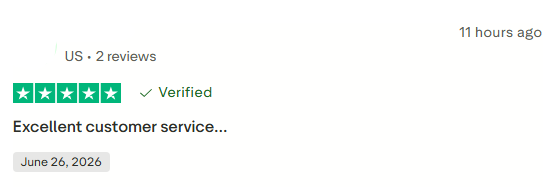
Positive feedback about a representative is relevant, but it does not necessarily establish that the reviewer received a personal loan, completed a debt-relief program or achieved a particular long-term result.
Examples of positive Trustpilot and BBB feedback
5. What Do Negative Symple Lending Reviews Allege?
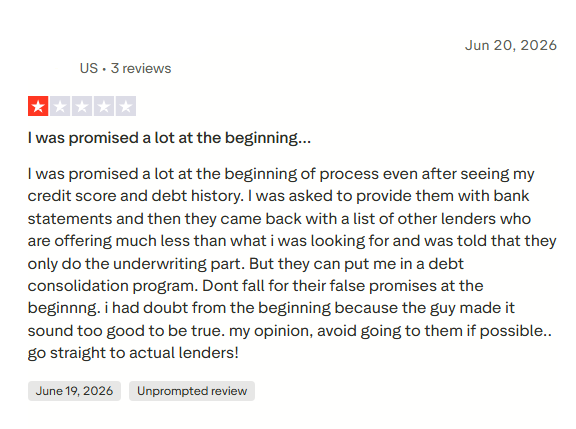
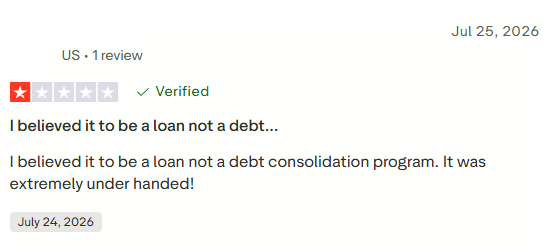
The recurring issue in the critical reviews is not simply poor customer service. It is a claimed mismatch between the product consumers expected and the financial solution later presented.
Loan expectations and debt-relief referrals
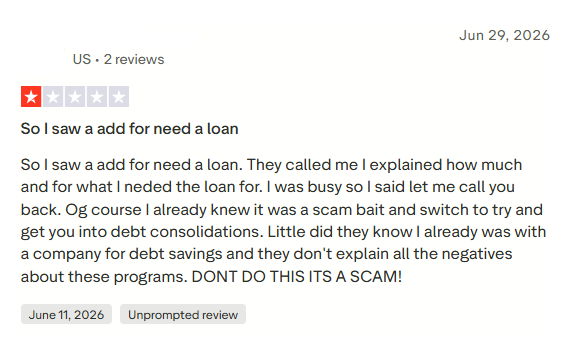
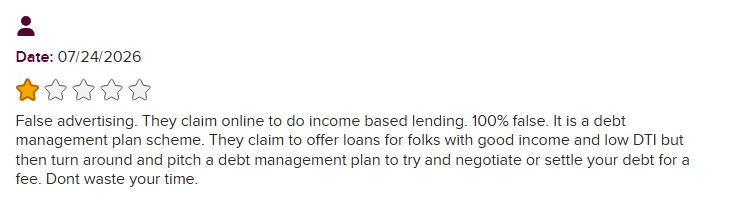
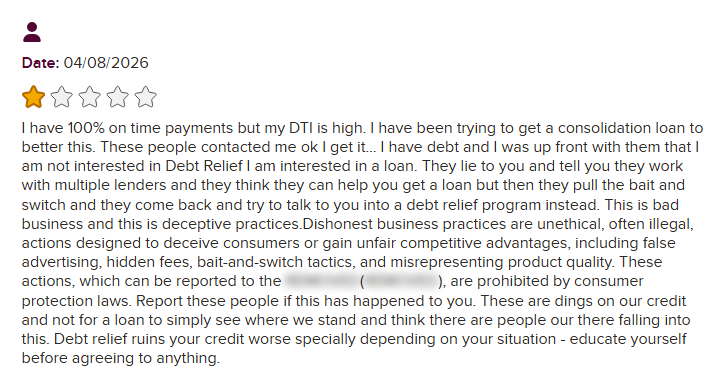
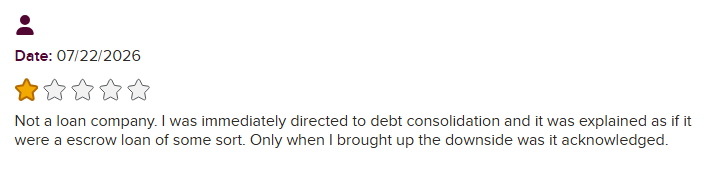
These are reviewer allegations, not proven universal practices
The screenshots establish that the reviews were published. They do not independently prove that Symple Lending universally misrepresents loan offers or directs every unsuccessful applicant to debt settlement.
What the review pattern suggests
Consumers should ask what happens when no suitable loan is available. Symple Lending may discuss another financial solution, but that solution should be clearly identified before the consumer agrees to continue.
Debt-Consolidation Loan vs. Debt-Relief Program
A consolidation loan and a debt-settlement or debt-relief program are fundamentally different.
| Issue | Consolidation Loan | Debt-Relief or Settlement Program |
|---|---|---|
| Basic structure | A lender provides new credit used to repay or replace existing debts. | A provider attempts to negotiate settlements with existing creditors. |
| Creditor payments | Existing creditors may be paid from the loan proceeds. | Consumers commonly stop making normal creditor payments and save toward settlements. |
| Credit qualification | Approval and APR generally depend on underwriting. | Qualification may depend more on hardship, debt and ability to fund settlements. |
| Credit impact | Depends on the inquiry, new account, utilization and payment history. | Missed payments, charge-offs and settlements can materially damage credit. |
| Creditor lawsuits | Paying existing accounts may reduce collection risk. | Creditors may continue collections or sue before settlement. |
| Cost | Interest and possible origination fees. | Settlements, provider fees, account fees and possible taxes. |
| Amount repaid | The new loan is generally repaid in full. | Creditors may voluntarily accept less than the contractual balance. |
Review the Consumer Financial Protection Bureau’s explanation of debt consolidation, credit counseling and debt settlement .
How Does Debt Settlement Work?
- Eligible unsecured debts are enrolled.
Programs commonly focus on credit cards, personal loans and certain medical debts. - Normal creditor payments may stop.
The consumer instead deposits money into a dedicated account. - Accounts may become delinquent.
Late fees, interest, collection calls, charge-offs and credit damage can occur. - The provider attempts negotiations.
Creditors may accept, reject or counter settlement proposals. - The consumer approves each settlement.
Creditor payments and applicable earned fees are then made according to the agreement.
Debt settlement does not stop creditor lawsuits
Settlement enrollment does not create an automatic stay. Creditors may continue collection activity or file lawsuits while settlement funds accumulate.
How Do Debt-Settlement Companies Charge Fees?
The original article stated that settlement companies generally charge a percentage of the amount saved. Some companies use that method, but many agreements calculate fees as a percentage of enrolled debt instead.
Illustrative enrolled-debt fee
Suppose a consumer enrolls $30,000 of debt and the agreement charges a 20% fee based on enrolled debt:
- Enrolled debt: $30,000
- Illustrative fee percentage: 20%
- Illustrative provider fee: $6,000
The fee is separate from the money needed to fund creditor settlements. Actual fee structures and results vary.
- Fee percentage
- Fee calculation method
- Estimated fee in dollars
- Dedicated-account fees
- Settlement-funding amount
- Expected program term
- Cancellation provision
- Possible canceled-debt tax consequences
Are You Looking for a Debt-Consolidation Loan?
Use the calculator below to compare possible consolidation-loan payments with nonprofit credit counseling, debt settlement and other alternatives. Personal information is not required to view the initial estimates.
Debt-Consolidation Loan Calculator
Compare potential loan offers and estimated payments for alternative debt-relief methods.
Results are educational estimates and are not Symple Lending loan offers or guarantees of approval.
Consider Nonprofit Credit Counseling
A nonprofit debt-management plan may be an alternative when a consumer cannot qualify for a favorable consolidation loan but can afford to repay the principal over time.
Participating creditors may reduce interest rates or waive certain fees, while the consumer makes one scheduled monthly payment through the counseling agency.
| Option | Potential Benefit | Important Limitation |
|---|---|---|
| Consolidation loan | Can replace several debts with one new loan and potentially lower interest. | Approval and pricing depend on lender underwriting. |
| Nonprofit debt-management plan | May lower participating credit-card interest without settling principal. | Enrolled cards may close and not every creditor participates. |
| Debt settlement | May resolve eligible debts for less than the contractual balance. | Commonly involves delinquency, fees, credit damage and lawsuit risk. |
| Chapter 7 bankruptcy | May discharge qualifying unsecured debts relatively quickly. | Eligibility, exemptions and nondischargeable debts must be reviewed. |
| Chapter 13 bankruptcy | Provides a court-supervised repayment plan and may address arrears. | Usually requires three to five years of plan payments. |
Questions to Ask Before Accepting an Offer
- Is this an actual loan?
Ask whether new funds will be deposited or paid directly to creditors. - Who is the lender?
Obtain the lender’s legal name and license information. - What is the actual APR?
Compare the APR rather than relying only on the starting rate. - What origination fee applies?
Determine how much will be deducted from the approved loan. - Will a hard inquiry occur?
The initial rate check may be soft, but later underwriting may involve a hard inquiry. - What happens if I do not qualify?
Ask whether you will be offered debt settlement or another program. - Will I stop paying creditors?
If yes, the proposal is not operating like a conventional consolidation loan. - What are all program fees?
Request the percentage, fee basis and estimated dollar amount. - Can creditors sue?
Ask how the program addresses collection activity and lawsuits. - What happens if I cancel?
Review refund rights, dedicated-account access and earned fees.
Frequently Asked Questions
Is Symple Lending a direct lender?
Symple Lending markets loan products and refers to lending partners. Confirm the legal name of the financial institution that would actually fund and service any loan offer.
What rates does Symple Lending advertise?
Its current website advertises fixed rates starting at 6.99%. Broader disclosures indicate actual APRs may reach 35.99%, depending on qualification and lender terms.
How much can someone borrow?
Symple Lending currently advertises loan amounts from $5,000 to $100,000. Approval and available amounts vary.
Does checking a rate affect credit?
Symple Lending advertises no credit impact for checking a rate. A later lender application may require a hard inquiry.
What is Symple Lending’s Trustpilot rating?
The supplied screenshot displayed a 4.9 out of 5 rating from 9,371 reviews. Ratings and counts can change.
What is Symple Lending’s BBB rating?
BBB currently lists Symple Lending as accredited with an A+ business rating. The supplied screenshot separately displayed a 4.06 customer review average from 333 reviews.
What do positive reviews say?
Positive reviewers commonly praise representatives for empathy, knowledge, professionalism and clear explanations.
What do negative reviews say?
Critical reviewers commonly allege that they expected a personal or consolidation loan but were later offered a debt-relief program.
Does a mailer guarantee approval?
No. Promotional mailers generally invite the consumer to apply. Final approval depends on underwriting and verification.
Is a consolidation program the same as a loan?
No. A loan provides new credit. A debt-relief or settlement program generally attempts to negotiate existing debts and may involve stopping creditor payments.
Can debt settlement hurt credit?
Yes. Debt settlement commonly involves missed payments, charge-offs and settled accounts, which can materially affect credit.
Can creditors sue during debt settlement?
Yes. Debt-settlement enrollment does not create an automatic stay, and creditors may continue collections or file lawsuits.
Confirm the Product Before You Move Forward
Symple Lending’s website clearly advertises personal and consolidation loans. The critical reviews show why consumers should still confirm what they personally qualify for and what happens when no suitable loan is available.
Obtain the lender’s name, APR, fees, term and total repayment amount. If the alternative requires stopping creditor payments, evaluate it as a debt-relief or settlement program—not as a consolidation loan.
Rates, loan amounts, partner relationships, review counts and company disclosures may change. Screenshots document what was displayed when captured but do not independently prove every reviewer allegation or guarantee any applicant’s result.
 Yes
Yes No
No